Control without grips
- Underhooks, overhooks and head position
- Body-lock control and hip connection
- Framing and escaping without cloth to grab
- Guard retention at a faster pace
- Staying safe in scrambles
The Program
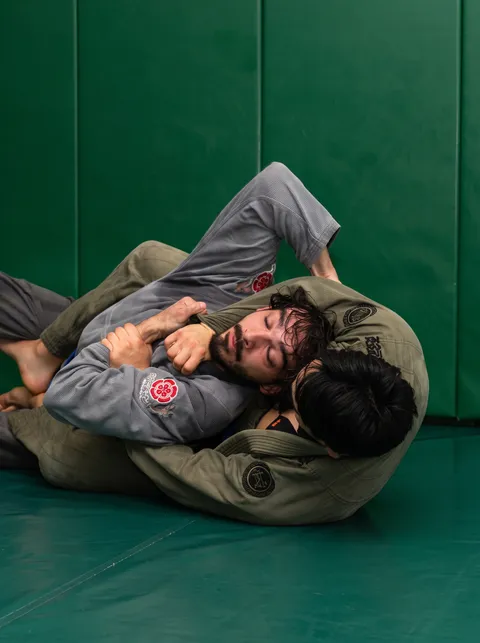
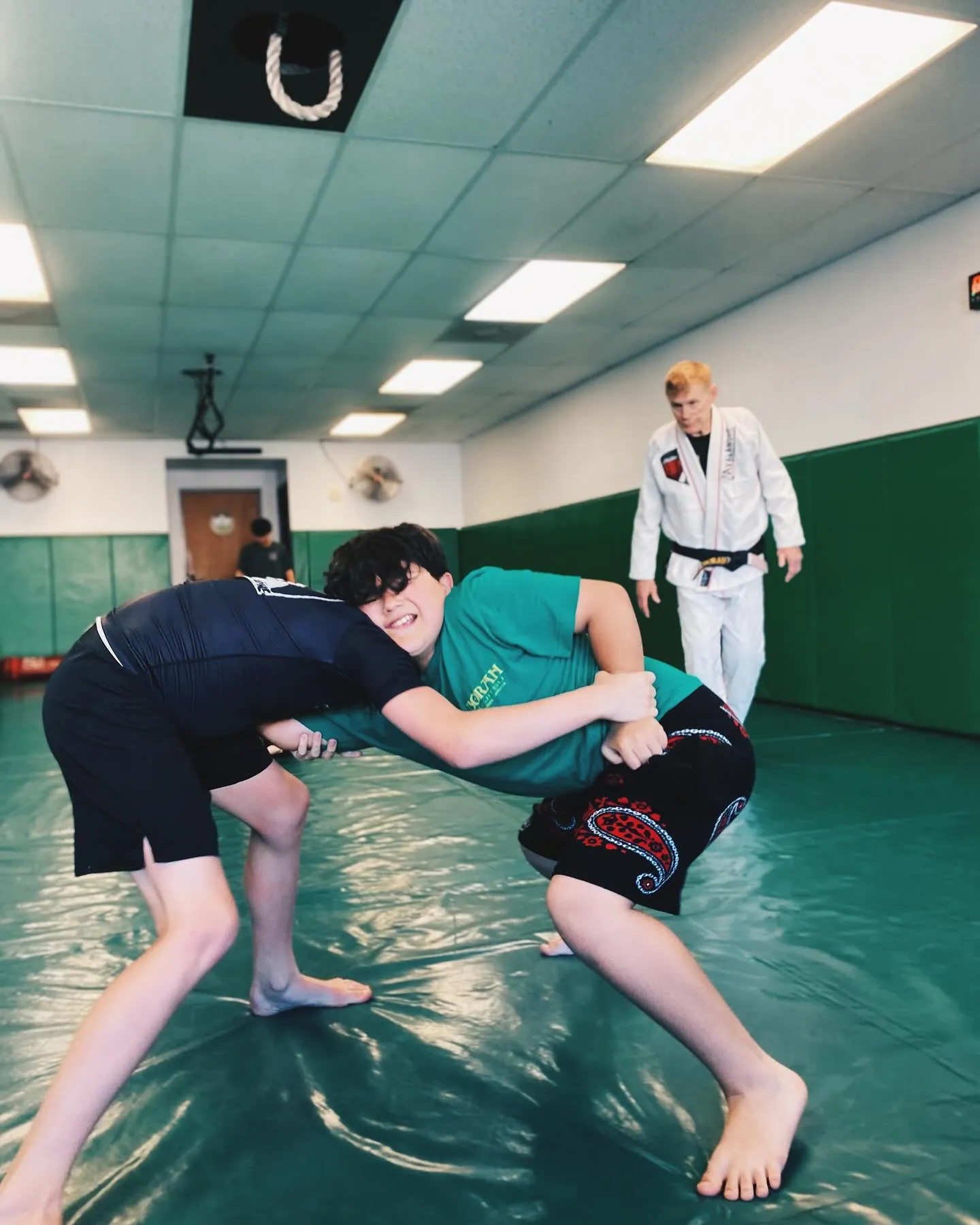
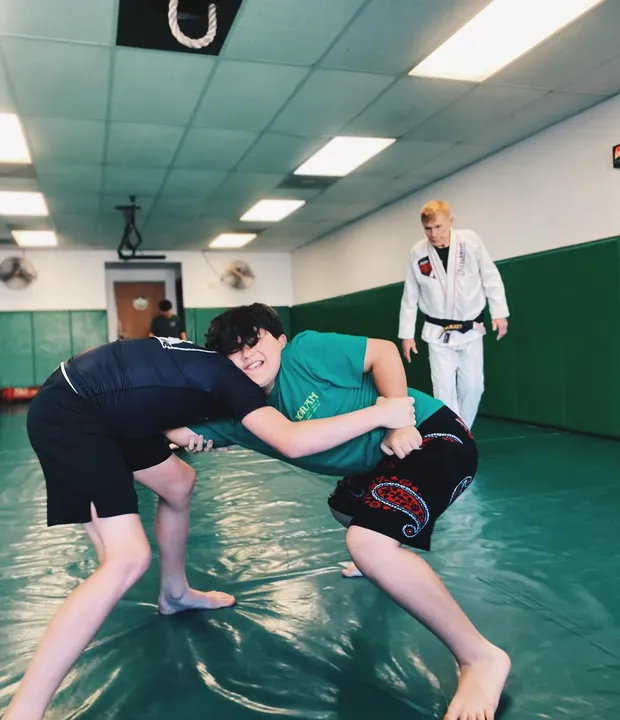
With no gi to grip, no-gi jiu-jitsu moves faster and depends on underhooks, overhooks, head position and body control instead of cloth. It is the form of grappling closest to what you see in mixed martial arts and in modern submission competition.
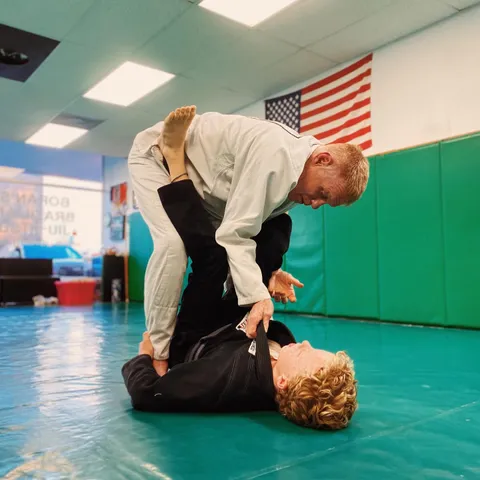
Training both styles makes you a far more complete grappler. The gi teaches precision and patience because your opponent can hold you still; no-gi teaches you to keep control when there is nothing to hold on to. Students at Boran are encouraged to do both, and most do.
The no-gi session runs long, two and a half hours on Wednesday evenings, which leaves real room for technique, drilling and extended live rounds without anyone being rushed off the mat.
Not sure it's you? Come and train a week for free and find out.
Your First Visit
Nobody likes walking into a room without knowing what happens. Here is the whole session, start to finish.
Mobility work plus the scrambling and transitional movement no-gi demands. The pace is higher than the gi class from the outset.
The position of the day broken down in detail, then drilled with a partner. Because the session is long, there is time to build a full sequence rather than one isolated move.
Starting from a defined position and working the problem live: passing a guard, escaping a body lock, defending a leg entanglement.
Extended live training with a range of partners. As always, how hard you go is your call, and you can sit rounds out.
The Curriculum
Progression
No-gi and gi share the same rank at Boran, so you hold one IBJJF-recognised belt across both, and mat time in either class counts toward it. Many students find that no-gi exposes holes in their gi game and vice versa, which is precisely why training both accelerates progress.
If you intend to compete in submission grappling specifically, Professor Boran will help you shape your training around the ruleset you are entering.
Questions
Most beginners are better served starting in the gi. It slows the game down and gives you time to think, which makes the fundamentals easier to absorb. Once those are in place, no-gi becomes a natural addition rather than a shock.
A rash guard and fitted shorts or spats are ideal, but a plain fitted t-shirt and athletic shorts will do for your first classes. The only firm rule is no zippers, buttons or pockets, which catch fingers and toes.
It is faster and sweatier, and positions are harder to hold, which some people find more physically demanding. It is not harder to learn; it simply rewards a different set of skills.
Yes, and you will have a genuine head start. Your takedowns and top control will already be strong; the work is mostly in learning submissions and getting comfortable fighting off your back.